The Bureau of Land Management does a really poor job of explaining why we have lotteries and permit systems. It is unfortunate because this faceless government institution serves an important part of our natural lands, keeping them intact during a popular time to be outside and going on adventures.
I am proud to be a part of this year's ArtSplash festival in downtown Tualatin, Oregon. The festival will be over the second weekend in July from the 13th-15th this year (2018).
The biggest lie in landscape photography is that you need a wide angle lens. I was deceived by the allure of a wider perspective that captured more than everything I could see.
As wild as National Parks may be here in the USA it is a common misconception that these are true wilderness. We look at these treasures of our natural lands, seeing them as icons attracting millions of visitors each year. They are really just that though, natural theme parks with iconic locations meant to amuse visitors.
Being good stewards of the land is not a political choice, it is a responsibility of everyone regardless! We should celebrate our environments as residents of this planet where our choices have a direct impact on its sustainability.
As many pictures as I take of beautiful locations, there is a deeper and darker reason to document these landscapes. Some more than others are in danger of changing rapidly over the next few decades becoming unrecognizable.
When starting out in photography I believed I needed to shoot something big, identifiable, and popular. I would travel vast distances to photograph something that had been shot hundreds of times before because it had a formula I could follow. A prescription for the prefect landscape photograph.
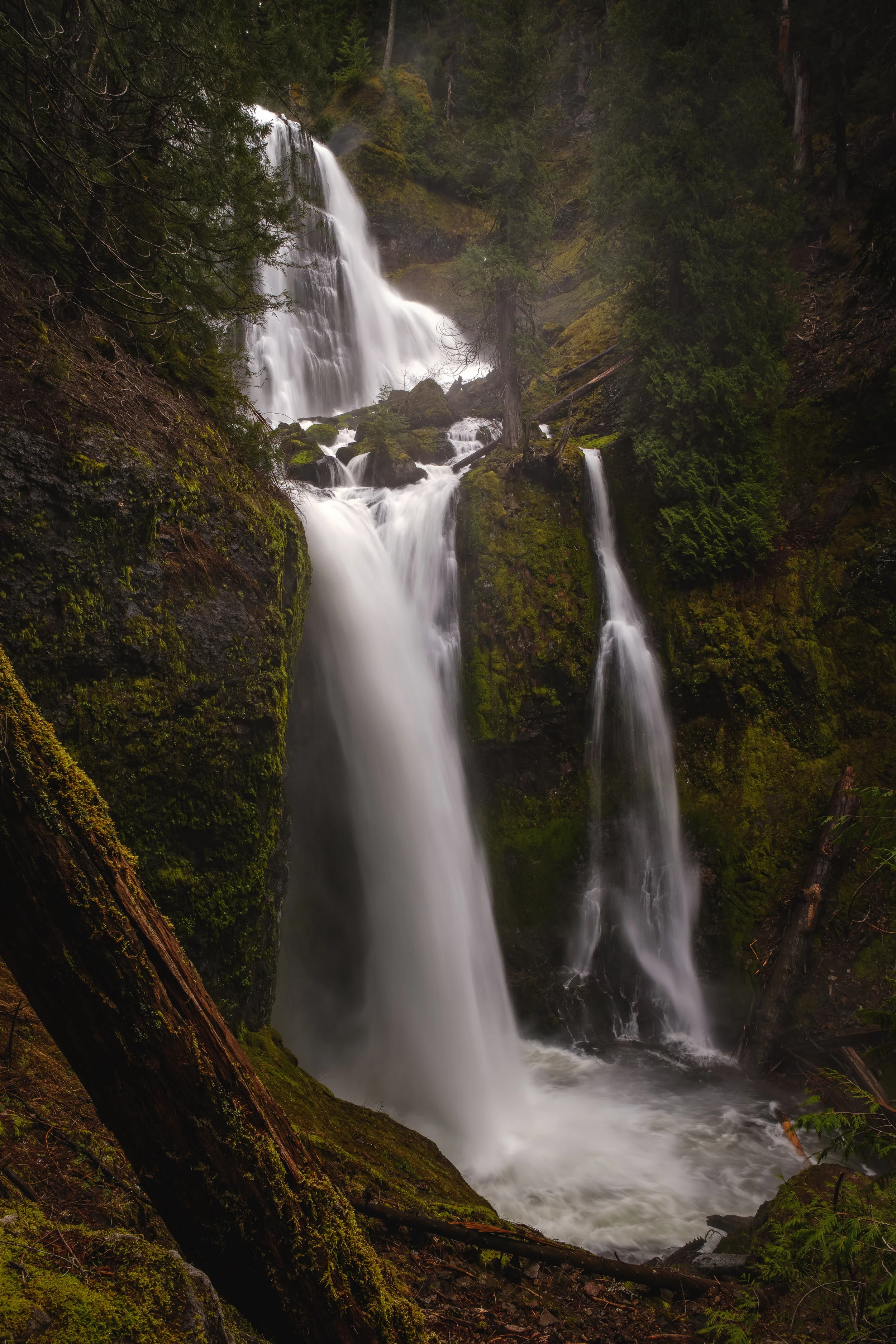
Shooting Waterfall Photos is not something easy to do in a consistently compelling way. Having been able to live in the PNW for a little while I have compiled a list of tips for success and when/where to use them around these majestic pieces in nature! Along the way are some examples of what I consider to be my best waterfall works as examples.
Focus stacking is an intermediate technique used in the field and in post to capture landscape images with incredible sharpness that you could not attain in a single image. It is typically used to create maximum sharpness when shooting with wide-angle lenses extremely close to the subject in the foreground. Sometimes within a couple inches from the bottom of the frame, even the smallest apertures would not physically be able to capture sharp images from front to back.